
People often assume Russian escort girls are just another version of what they’ve seen in movies or on sketchy websites-some exotic, mysterious, or even dangerous women waiting to be bought. But that’s not how it works. Real Russian escort girls aren’t defined by clichés. They’re mothers, students, artists, translators, and professionals who choose this path for reasons as varied as their backgrounds. Many aren’t driven by desperation. Some are drawn to the freedom, the pay, or the chance to travel. Others see it as a way to support family back home without leaving their country behind.
It’s easy to confuse this with other global services, like an escort girl dubaï, where the scene operates under different laws, expectations, and cultural norms. In Dubai, the entire industry is technically illegal, yet it thrives behind closed doors with a level of discretion that’s almost institutionalized. In Russia, the situation is more complex-prostitution itself isn’t illegal, but organizing it or advertising it is. That means most connections happen through word of mouth, private networks, or trusted apps that don’t scream "escort service" on the surface.
They’re Not What You Think
One of the biggest myths is that Russian escort girls are uneducated or from poor rural areas. That’s outdated. In Moscow, Saint Petersburg, and even smaller cities like Kazan or Yekaterinburg, many women have university degrees-linguistics, international relations, economics. Some worked in corporate jobs before switching to escorting full-time. Why? Because the hourly rate can be ten times what they made in an office, with no commute, no boss, and no corporate politics.
They don’t wear flashy dresses and high heels just to impress. Many dress like they’re going to a café or a gallery opening. Their profiles on private platforms often include real hobbies: photography, yoga, reading Dostoevsky, or cooking traditional borscht. They’re not selling fantasy-they’re selling presence. Time. Conversation. Companionship. The physical part? That’s optional. Many clients just want someone to talk to after a long day.
The Legal Gray Zone
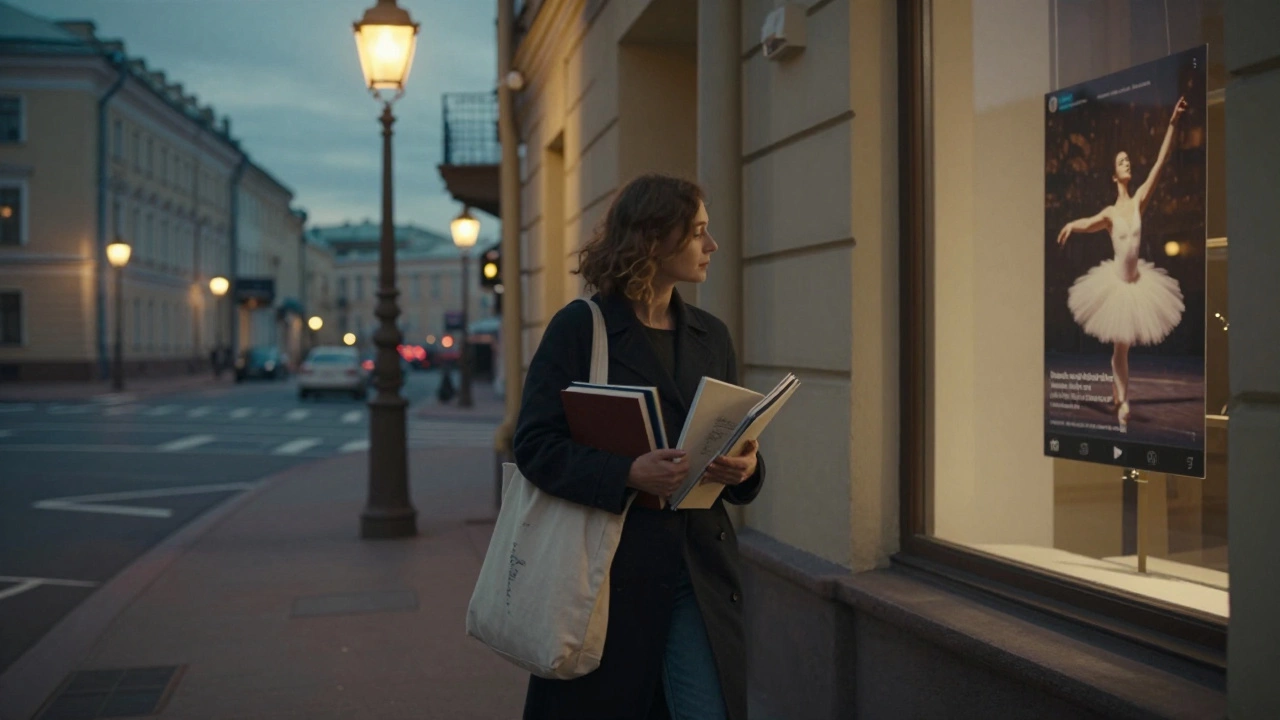
Russia doesn’t have laws against prostitution itself. You can’t be arrested for selling sex. But if you advertise it? That’s a crime. If you rent an apartment and take clients there regularly? That’s considered running a brothel. So how do they operate? Quietly. Through encrypted apps. Through friends of friends. Through Instagram DMs that look like fashion posts. A woman might post a photo of herself at a ballet, captioned "Beautiful evening," and only those who know the code will understand it’s an invitation to connect.
Police raids happen, but they’re usually targeted at organized operators-not individual women. Most escort girls avoid any kind of public profile. They don’t use fake names because they don’t want to be found. They use real names, real photos, and real social media accounts. They’re not hiding from the law-they’re hiding from judgment.
Why This Isn’t Like Other Countries
Compare this to an escort algérienne in Paris or Marseille. In France, while prostitution isn’t illegal, paying for sex is. Clients get fined. The women? They’re protected under social programs. In Russia, there’s no safety net. No healthcare access tied to the job. No legal recourse if a client turns violent. That’s why trust is everything. Most Russian escort girls vet clients intensely. They ask for ID. They meet in public first. They share their location with a friend. They carry pepper spray. They don’t trust strangers.
And then there’s the cultural layer. In Russia, there’s still a strong stigma around women who are sexually autonomous. Many of these women face rejection from family. Some have been disowned. Others hide their work from everyone-even their closest friends. That’s why the community among escort girls is tight-knit. They share tips on safe clients, legal advice, how to handle blackmail, and where to get emergency help.
What Clients Really Want
It’s not all about sex. A lot of clients are middle-aged men-engineers, doctors, entrepreneurs-who feel lonely. They’re not looking for a hooker. They’re looking for someone who listens without judging. Someone who can speak fluent English, French, or German. Someone who knows how to order wine at a nice restaurant without pretending. Someone who doesn’t ask for money upfront.
Some clients come once. Others return for months. The best relationships aren’t transactional-they’re mutual. A woman might help a client practice Russian for his business trip. He might take her to a concert she’s never been to. That’s the real value. Not the act. The connection.
The Rise of Digital Platforms
Five years ago, most Russian escort girls used Telegram channels or private forums. Now, they use apps built for dating, but repurposed. Bumble, Tinder, even OkCupid. They create profiles that look like those of any other single woman-travel photos, art, pets, quotes from poets. Then they wait. The right person finds them. No ads. No listings. No "services offered" section.
Some have started their own websites-simple, clean, no flashy banners. Just a bio, a few photos, and a contact form. They don’t say "escort." They say "companion," "travel partner," or "cultural guide." They offer to show foreigners around Moscow’s hidden bookstores or help them navigate the metro system. The rest? It develops naturally.
What Happens When They Quit
Many Russian escort girls don’t stay in this line of work forever. Some save enough to start a small business-a café, a translation agency, a boutique. Others go back to school. A few move abroad. One woman I spoke with in Saint Petersburg used her earnings to study law. Now she helps other women who’ve been exploited by traffickers.
The ones who leave often say the hardest part isn’t the work. It’s the silence. No one wants to hear their story. Friends disappear. Family stops calling. Society treats them like they’ve lost their dignity. But they didn’t. They chose a hard path to build something better.
Breaking the Stigma
There’s a growing movement among Russian women-former escort girls, journalists, activists-who are speaking out. Not to justify the industry, but to humanize it. They run anonymous blogs. They host podcasts. They’ve started support groups in cities where no one else will. They say: "We’re not victims. We’re not criminals. We’re women making choices in a system that doesn’t give us many options. And we deserve to be treated like people."
It’s not about promoting this life. It’s about stopping the lies. The idea that Russian escort girls are all from the same place, with the same story, and the same fate. They’re not. They’re individuals. With dreams. With fears. With families. With talents. With names.
Next time you hear the phrase "Russian escort girl," don’t picture a stereotype. Picture a woman who chose a difficult path to gain control over her life. That’s the truth behind the myth.
And if you’re curious about what other global services look like, you might come across an escort a dubai-where the rules are different, the risks are higher, and the discretion is absolute. But the people? They’re still just people.